
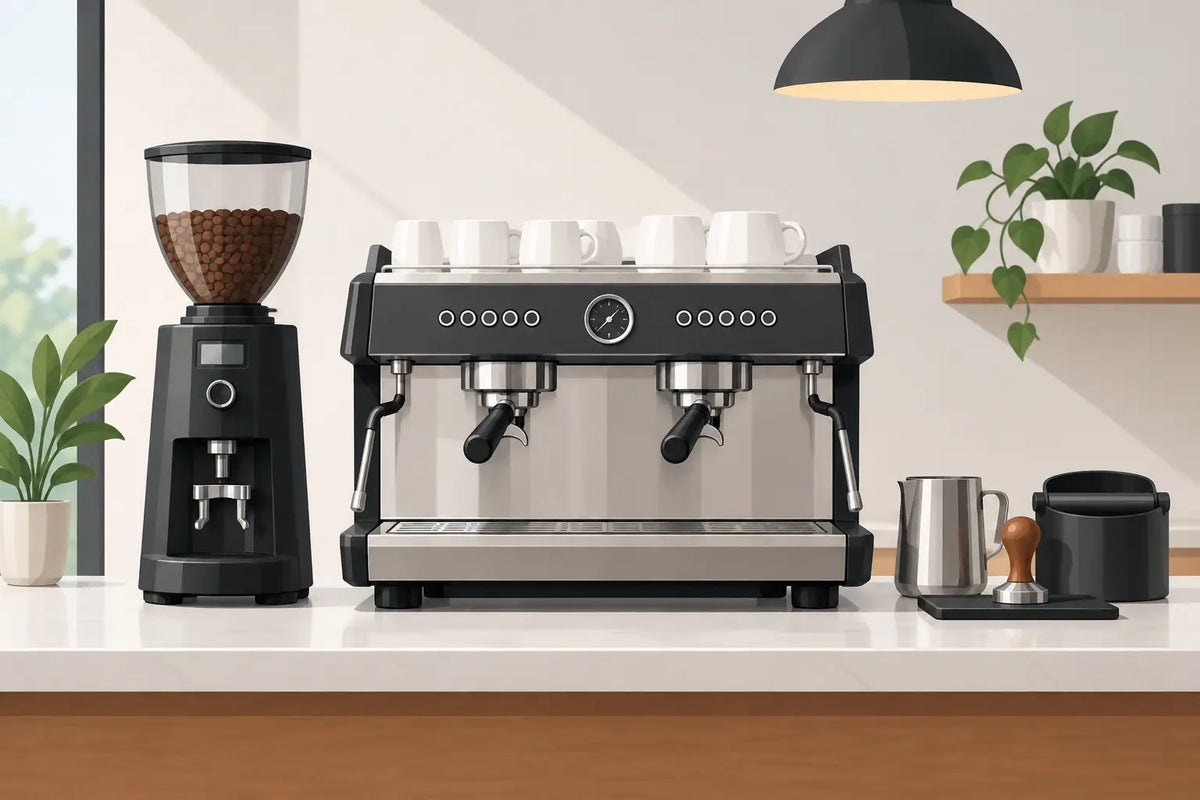
The first espresso of the morning sets a standard. Its aroma should be full, its crema should be inviting, and its flavor should feel as considered as the space where it is served. The right professional coffee equipment makes that experience repeatable, whether you are preparing a quick flat white at home, welcoming clients in an office, or serving guests during a busy breakfast service.
Premium coffee is only one part of the equation. The machine, grinder, water, workflow, and daily care all shape what reaches the cup. Choosing well is not about buying the biggest machine or adding every accessory. It is about building a coffee setup that suits your volume, menu, team, and expectations for every pour.
What Professional Coffee Equipment Should Deliver
Professional equipment earns its place through consistency. It should maintain a stable brewing temperature, deliver reliable pressure, and give users clear control without making every coffee feel like a technical project. For businesses, it also needs to keep pace during peak periods. For homes, it should bring café-quality results into a simple daily ritual.
Start with the experience you want to offer. An executive office may need fast, intuitive drinks with minimal staff involvement. A boutique hotel may require a versatile machine for espresso, americano, cappuccino, and latte service throughout the day. A coffee-focused restaurant may prioritize hands-on control, a high-capacity grinder, and tools that help a trained barista refine each shot.
There is no single ideal setup. A fully automatic machine can be the smartest choice when speed and ease matter most. A traditional espresso machine can offer greater control when skill, presentation, and menu customization are central to the experience. The right decision is the one that creates excellent coffee reliably for the people using it.
Choose the Machine Around Your Daily Demand
A machine should be selected for real demand, not the quietest hour of the day. Consider how many cups you expect during a typical morning rush, how many different beverages you plan to serve, and who will operate the equipment. Capacity matters, but so does recovery time: a machine that performs beautifully for one drink at a time may struggle when several guests order milk-based coffees together.
Fully Automatic Machines for Effortless Service
Fully automatic machines are designed for convenience without compromising the pleasure of a well-made cup. Fresh beans are ground, brewed, and often combined with milk at the touch of a button. This makes them a natural fit for offices, reception areas, meeting rooms, premium self-service stations, and households that enjoy variety without barista training.
Look for intuitive drink settings, adjustable strength and volume, and easy-to-clean milk systems. If the machine will serve several people, a generous bean hopper, water tank, and grounds container reduce interruptions. Refrigeration equipment can also be valuable in commercial settings, helping keep fresh milk at the right temperature while supporting a faster, cleaner workflow.
The trade-off is control. Automatic systems produce dependable results, but they do not offer the same level of manual adjustment as a traditional espresso station. If your goal is convenience, that is often a benefit rather than a limitation.
Traditional Espresso Machines for Hands-On Craft
A traditional machine gives a skilled user direct influence over dose, distribution, tamping, extraction time, and milk texture. It is ideal for cafés, restaurants, and hospitality venues where espresso is part of the signature experience. With the right coffee and training, it can produce expressive shots and finely textured milk that make a cappuccino or latte feel truly memorable.
This route requires more than the machine itself. You will need a capable grinder, a tamper that fits the basket correctly, milk pitchers, knock boxes, cleaning tools, and a routine that every operator follows. It also requires time. The reward is a more tactile coffee ritual and greater room to tailor drinks to the guest.
The Grinder Is Not an Afterthought
Coffee begins to lose its aromatic character soon after grinding. That is why a quality grinder is essential wherever whole beans are used. It determines how evenly the coffee is ground and, in turn, how evenly water moves through the puck. An uneven grind can lead to weak, sour, bitter, or inconsistent espresso, even when the beans and machine are excellent.
For espresso, choose a grinder with precise, repeatable adjustment. Small changes in grind size can have a noticeable effect on extraction, particularly as humidity, bean freshness, and daily usage change. In high-volume environments, speed and heat management also matter. A grinder that runs too hot can affect flavor, while one that is too slow can create a queue at the counter.
For offices and homes, integrated grinders inside automatic machines can simplify the entire process. For barista-led service, a dedicated espresso grinder provides the control needed to dial in the coffee. Keep the grinder clean, empty old grounds from the chute, and adjust settings gradually. These small habits protect the rich authentic flavor you expect from premium beans.
Build a Workflow, Not Just a Countertop Display
Beautiful equipment should also make work easier. Place the grinder close to the espresso machine, keep cups and saucers within reach, and give milk, water, and cleaning supplies a logical home. A good layout reduces unnecessary movement and makes the service feel calm, even when demand is high.
Think about the full path of each drink. Beans go into the hopper, coffee is ground and brewed, milk is steamed or dispensed, the drink is served, and equipment is cleaned. If any stage is awkward, slow, or difficult to access, the quality of service can suffer. In a commercial setting, this affects both customer experience and staff confidence.
Accessories are practical tools, not decorative extras. A calibrated tamper can support more even extractions. A milk thermometer helps newer baristas learn temperature control. A knock box keeps the station tidy. Good filtration can protect machine components and improve taste where water quality is a concern. Select the pieces that solve a real operational need rather than filling the counter.
Coffee Format Shapes the Equipment Choice
Your preferred coffee format should guide your setup. Whole beans are ideal when fresh grinding and aroma are priorities. They suit traditional espresso stations and many bean-to-cup machines. Capsules offer speed, cleanliness, and portion consistency, making them especially appealing for homes, small offices, and meeting spaces where every user should be able to prepare a quality cup with ease.
Professional coffee pads can also offer a practical solution for venues that need straightforward preparation and repeatable results. The best option depends on volume, drink selection, available staff time, and how much hands-on involvement you want.
Café Royal brings these choices together through a complete coffee system, from distinctive coffees and convenient formats to professional machines, accessories, and support. That integrated approach matters because equipment performs best when it is paired with coffee designed for the brewing method and maintained with the right care.
Protect Performance With Daily Care
The most impressive machine cannot compensate for neglected maintenance. Coffee oils build up, milk residue hardens quickly, and mineral scale can affect heating, flow, and flavor. Daily cleaning protects both the equipment and the cup.
At the end of service, wipe steam wands, empty drip trays and grounds containers, rinse removable milk components, and follow the machine's recommended cleaning cycle. For traditional machines, backflushing and cleaning group heads should be part of the routine. For automatic machines, respond promptly to cleaning and descaling prompts rather than postponing them.
Water deserves attention, too. Filtered water can reduce scale buildup and help coffee taste more balanced. Your local water conditions, machine type, and usage levels will determine how often filtration and descaling are needed. Professional servicing adds another layer of reassurance, particularly for equipment that supports a busy workplace or hospitality operation.
Make the Investment Feel Right Every Day
Professional equipment should feel like an invitation to pause, connect, and enjoy something made with care. A dependable machine can elevate a client meeting, make a guest feel welcomed, or turn a familiar morning into a small moment of luxury. Swiss precision is valuable not because it sounds impressive, but because it helps create the same satisfying result, cup after cup.
Choose the setup that fits your routine now, with enough flexibility for the moments you want to grow into. Then give it good coffee, fresh water, thoughtful care, and a little space to awake the senses.