A Lelit machine can take a home coffee setup well beyond push-button brewing, but the right model depends less on appearance and more on how you make coffee each day. Lelit espresso machines range from compact single-boiler units for focused espresso drinkers to dual-boiler machines built for precise temperature control and frequent milk drinks. Choosing well means matching the machine’s heating system, workflow, and maintenance needs to your routine.
For many buyers, the machine is only part of the decision. A capable grinder, suitable water, regular cleaning, and access to compatible service and parts all affect what reaches the cup. These are premium appliances designed to be used, cared for, and adjusted over time.
Start With Your Daily Coffee Routine
Before comparing specifications, consider the number and type of drinks you prepare. Someone making one or two straight espressos each morning has very different requirements from a household producing several flat whites before work. The main question is whether you need to brew espresso and steam milk at the same time.
A single-boiler machine heats one boiler for brewing or steaming. It is usually compact, more affordable, and well suited to espresso-first routines. The trade-off is workflow: after pulling a shot, the machine needs time to rise to steam temperature, then cool back down before the next espresso. That is manageable for one or two drinks, but less convenient when serving guests.
Heat-exchanger and dual-boiler machines are designed for higher-volume use. A heat-exchanger machine lets the user brew and steam together, often with the classic lever-operated E61 group. It offers a satisfying hands-on experience, although temperature management requires more attention. A dual-boiler machine separates brewing and steam duties, giving greater consistency and easier control when preparing milk drinks back to back.
Understanding the Lelit Espresso Machines Range
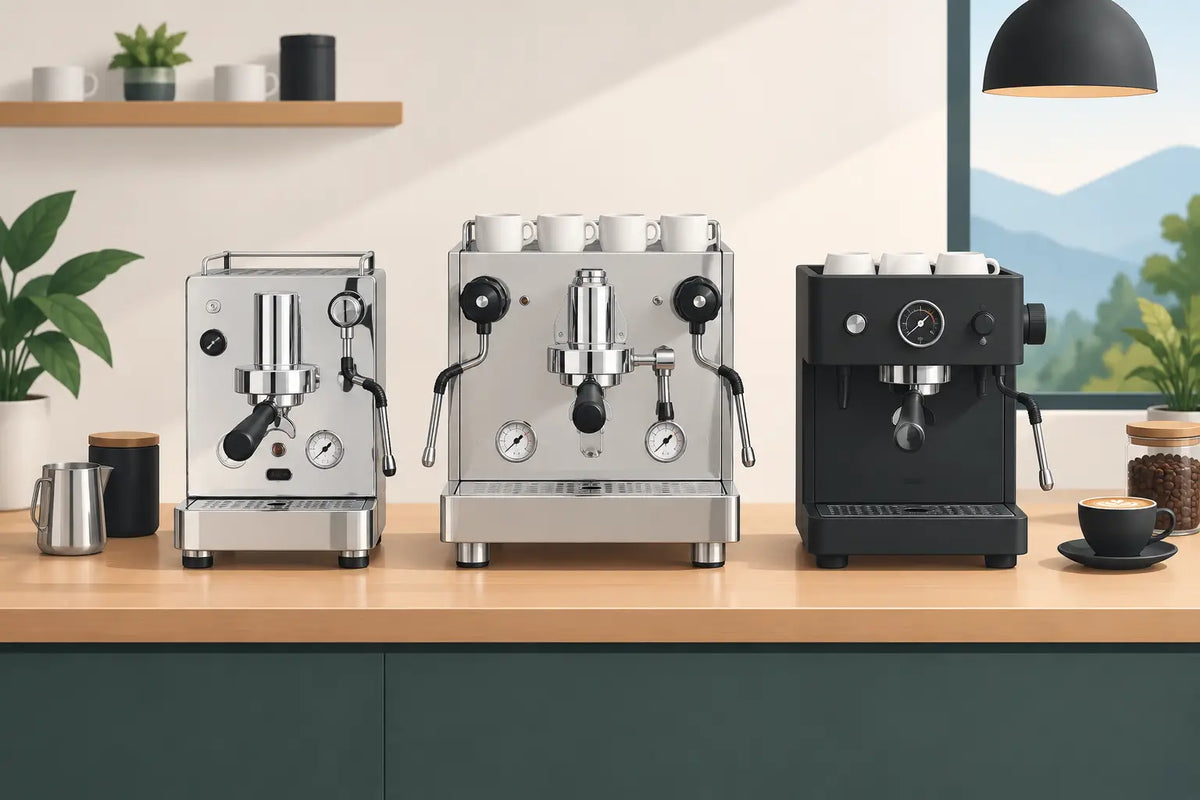
Lelit builds machines across several practical categories. Availability can vary, but understanding these formats makes it easier to compare models rather than choosing based on price or stainless-steel panels alone.
Compact and entry-level machines
Models such as the Anna are aimed at users moving from basic domestic equipment into more deliberate espresso preparation. Depending on the version, features can include pressure gauges, PID temperature control, and a professional-style portafilter. Their compact footprint is useful where counter space is limited.
A machine in this class asks the user to develop a routine: grind fresh coffee, dose consistently, distribute evenly, tamp level, and watch extraction time. That involvement is the appeal for many home baristas. It also means the grinder matters as much as the machine. An inconsistent grinder can make even a well-built espresso machine feel difficult to use.
Single-boiler machines with stronger temperature control
The Victoria is a popular format for the espresso-focused user who wants PID control and a compact design. A PID allows the brew temperature to be set and held more accurately than a basic thermostat system. This is especially useful when changing between coffees, since a light roast may benefit from a different brew temperature than a darker traditional espresso blend.
This category is a strong fit for someone who values shot quality and does not regularly make multiple milk drinks in succession. It is not necessarily the cheaper alternative to a larger machine in terms of results. With fresh beans, an appropriate grinder, and good technique, a carefully used single boiler can produce excellent espresso.
Heat-exchanger machines for traditional workflow
The MaraX occupies a useful middle ground for households that want simultaneous brewing and steaming without moving to a full dual-boiler platform. Its E61-style group gives the machine a traditional look and lever-based workflow that many enthusiasts enjoy.
Heat-exchanger machines have a learning curve. Water in the group can run hotter after the machine has been idle, so users may need a short flush before brewing. This is not a fault - it is part of operating the system correctly. The reward is strong steam performance and a more efficient workflow for cappuccinos, lattes, and several drinks in a session.
Choose this style if you enjoy being involved in the preparation process. If you want numerical temperature adjustment and maximum repeatability with minimal routine, a PID-controlled dual boiler may be the better fit.
Dual-boiler machines for control and volume
The Elizabeth and Bianca represent the more advanced end of Lelit’s domestic lineup. Dual boilers enable brewing and steaming at the same time, while PID controls allow more direct temperature adjustment. This is valuable for households with regular milk-drink demand, for users who experiment with different coffees, or for those who want fewer compromises during busy mornings.
The Bianca adds a manual flow-control capability, allowing the user to adjust water flow during extraction. This can be useful for experimenting with pre-infusion and profiling shots, particularly with fresh specialty coffees. It is not a requirement for making great espresso. Flow control rewards curiosity and practice, while a well-set standard extraction will suit many users perfectly.
A larger, more feature-rich machine also takes more counter space, uses more energy during warm-up, and needs more deliberate cleaning. Buy the capability you will use, rather than buying complexity for its own sake.
Do Not Underestimate the Grinder
Espresso is sensitive to small changes in grind size. If a shot runs too quickly, tastes thin, and has little body, the grind may need to be finer. If it barely drips through the basket and tastes harsh or muddy, it may need to be coarser. A suitable espresso grinder makes these adjustments predictable.
For a Lelit machine with a standard 58 mm portafilter, use baskets, tampers, dosing funnels, and distribution tools made for that diameter. For compact models with a different portafilter size, confirm compatibility before ordering accessories. A tool that almost fits is rarely a useful tool.
It is also sensible to keep a small digital scale at the machine. Measuring coffee dose and beverage yield gives a repeatable starting point. For example, if a coffee tastes good at a 1:2 ratio, that may mean 18 grams of ground coffee producing roughly 36 grams of espresso. The exact recipe changes by coffee, but measurement removes guesswork.
Water Quality Is Part of Machine Care
Scale is one of the most common causes of declining performance in espresso machines. Mineral deposits can restrict water pathways, affect heating efficiency, and eventually lead to costly repairs. This matters particularly in areas where tap water is hard.
Use water appropriate for espresso equipment and follow the machine’s guidance on filtration. A water filter is not only about taste. It is a preventative maintenance measure that protects boilers, valves, and internal components. Avoid treating descaling as a routine substitute for proper water management. Some machines should only be descaled according to their manufacturer guidance, because incorrect chemical use or poor rinsing can create further problems.
If you are unsure about your water source or filtration setup, get advice before filling the reservoir. It is easier to prevent mineral buildup than to remove it after it has affected performance.
A Simple Maintenance Routine That Protects Performance
Daily care is quick and makes a substantial difference. Purge and wipe the steam wand immediately after steaming milk. Flush the group after brewing to clear loose coffee particles. Empty and rinse the drip tray and portafilter basket rather than allowing coffee oils to dry in place.
Weekly cleaning should include a more thorough wash of baskets, shower screen areas, and the portafilter. Machines with a three-way solenoid valve may also need periodic backflushing with an espresso-machine cleaning detergent, following the model’s instructions. Milk residue and coffee oils are separate problems, so use the correct cleaner for each task.
Replace worn group gaskets, shower screens, filters, and steam tips when needed. A slow drip from the group, an uneven shower pattern, reduced steam output, or changes in pump sound are worth investigating early. Small service items can prevent a more disruptive repair later.
For owners in the UAE, specialist support is particularly useful when a machine needs diagnosis beyond routine cleaning. Perfetto After Sales provides manufacturer-aligned repair support for Lelit equipment, including free collection and delivery across all seven emirates, helping reduce the inconvenience of transporting a heavy espresso machine.
Choose for the Coffee You Will Actually Make
A compact PID single boiler is often the sensible choice for someone who drinks espresso or an occasional cappuccino. A heat-exchanger machine suits users who want strong milk-drink capability and enjoy a traditional process. A dual boiler is the practical step up for frequent entertaining, multiple milk drinks, and detailed temperature control.
The best Lelit machine is not the one with the longest feature list. It is the one that fits your counter, your grinder, your morning pace, and the level of care you are prepared to give it. Set it up with good water and fresh coffee, keep its maintenance routine consistent, and it can remain a dependable part of your coffee routine for years.