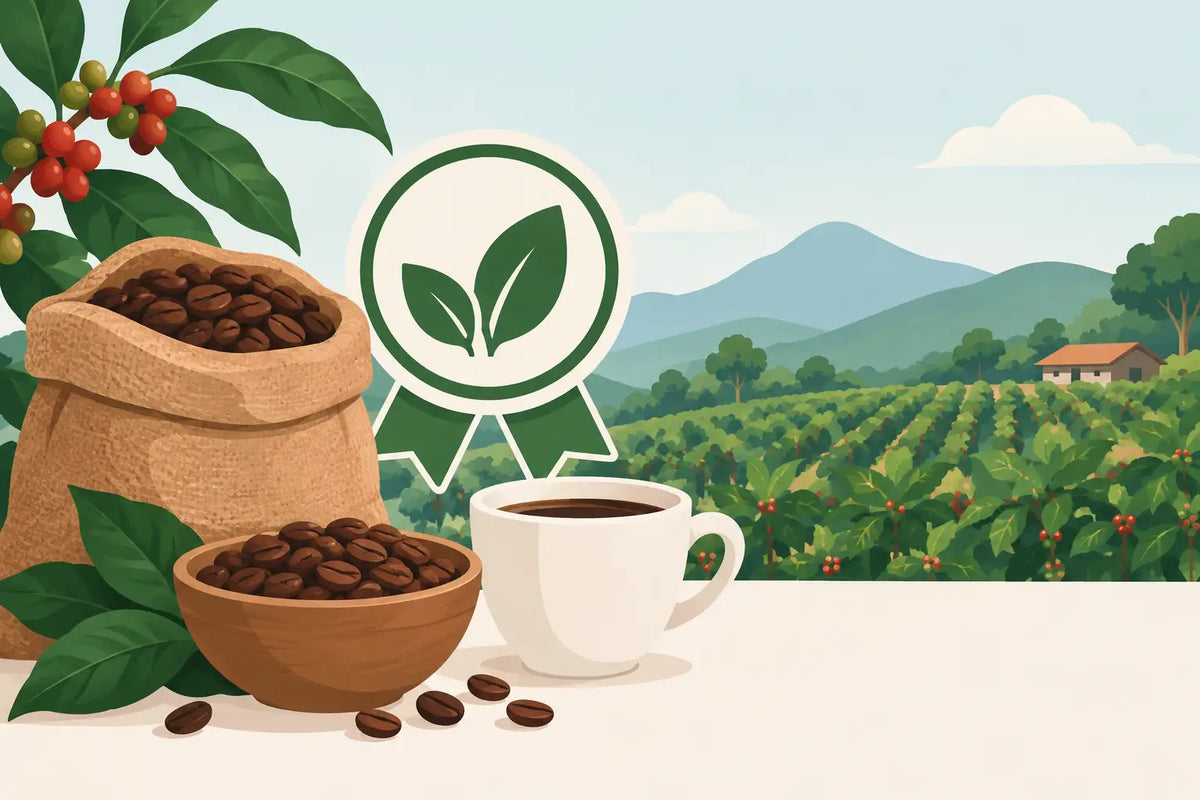
The coffee that starts your morning is the result of a long chain of decisions: how cherries are grown, who harvests them, how water is managed, and what happens after the cup is empty. Certified sustainable coffee gives those decisions greater visibility, pairing the pleasure of a rich espresso or smooth lungo with standards designed to support a better coffee future.
For coffee drinkers who expect more from their daily ritual, certification is not a substitute for flavor. It is part of the story behind it. Thoughtful farming, careful processing, and long-term relationships with growers can protect the conditions that make exceptional coffee possible, cup after cup.
What Certified Sustainable Coffee Means
Certified sustainable coffee is coffee verified against defined environmental, social, and sometimes economic standards by an independent certification program. The details vary by program, but the shared aim is to encourage more responsible practices throughout coffee production.
At farm level, that can mean protecting forests and biodiversity, improving soil health, reducing the use of certain agricultural inputs, and managing water more carefully. It can also include standards for worker safety, labor conditions, community development, traceability, and fairer commercial practices.
Certification matters because coffee is an agricultural crop exposed to real pressure. Climate change, volatile prices, plant disease, and extreme weather can affect both harvest quality and growers' livelihoods. More sustainable practices are intended to help farms become more resilient while protecting the landscapes where coffee grows.
That said, a certification seal should be understood as a meaningful signal, not a blanket promise. It does not mean every farm faces the same conditions or that every sustainability challenge has been solved. The strongest approach combines certification with transparent sourcing, continuous improvement, and a willingness to measure progress over time.
The certifications you may see on coffee
Different labels focus on different parts of sustainability. Rainforest Alliance certification commonly emphasizes biodiversity, climate resilience, and improved farm management. Fairtrade places particular attention on trading conditions, farmer organizations, and community investment. Organic certification focuses on farming practices and restrictions around synthetic pesticides and fertilizers.
Other programs may concentrate on baseline sustainability requirements, verification systems, or supply-chain traceability. A coffee can carry more than one certification, though it does not need multiple seals to be responsibly produced. What matters is understanding what each standard covers and avoiding assumptions based on a logo alone.
For shoppers, the practical takeaway is simple: look for a recognized certification and consider it alongside the information a coffee brand provides about origin, roasting, packaging, and recycling. Responsible choices are most credible when they are specific.
Why Sustainable Sourcing Can Shape Flavor
Sustainability and sensory quality are often discussed separately, but they are closely connected. Healthy soil, appropriate shade, careful cherry selection, and skilled post-harvest processing all influence the character of the coffee in your cup. A vibrant aroma, balanced body, or lingering cocoa finish begins long before roasting.
Coffee farms are not identical. High-altitude Arabica, for example, may develop slowly in cooler conditions, creating complexity and acidity that suit a refined espresso. Other coffees bring strength, crema, and a deeper roasted profile. Sustainable farming is not about forcing every origin into one flavor style. It is about supporting practices that help growers cultivate quality in ways that respect local ecosystems and communities.
For a home coffee drinker, this creates a more satisfying choice. You can still select coffee based on the experience you want: an intense shot before work, a velvety cappuccino for guests, or a flavored coffee for an afternoon pause. Certification adds another dimension to that decision, allowing flavor and responsibility to sit in the same cup.
Choosing Certified Sustainable Coffee for Your Routine
The best coffee format is the one you will enjoy and use well. Whole beans offer flexibility for those who enjoy dialing in a grinder and experimenting with extraction. Capsules offer precise portions, reliable results, and an easy route to café-style beverages at home. Professional formats can support consistent service in offices, hospitality settings, and busy workplaces.
When choosing certified sustainable coffee, begin with the flavor profile rather than treating sustainability as an afterthought. If you prefer bold, roasted notes with a full body, choose a blend designed for espresso and milk-based drinks. If you enjoy brighter, more delicate coffees, look for a lighter profile that lets origin character come forward. A coffee that suits your taste is far more likely to become a lasting part of your routine.
Then consider the full system around the coffee. Portion-controlled formats can help reduce wasted grounds, particularly in offices or homes where every person prepares coffee differently. Whole beans can be an excellent choice when you can store them properly and grind only what you need. Neither format is automatically better in every situation. Waste, energy use, packaging, and the number of drinks prepared all shape the outcome.
Capsule materials also deserve attention. Recyclable materials are valuable only when collection and recycling systems are accessible and used correctly. Before disposing of capsules, check local guidance, separate components where required, and use available recycling services. The most responsible package is not simply one with a sustainability claim. It is one that can realistically be handled as intended after use.
For offices and hospitality spaces
A responsible coffee program can be especially meaningful in a workplace or guest setting, where hundreds of cups may be served each week. Start with a machine that matches real demand. An oversized machine running below capacity can waste energy, while an undersized one can create inconsistent drinks and unnecessary downtime.
Choose coffee formats that fit your service style, train staff on correct preparation, and set up clear collection points for used capsules or coffee waste. Reliable maintenance also matters. A well-cared-for machine delivers better extraction, uses resources more efficiently, and extends the useful life of the equipment.
For businesses, sustainability works best as part of the daily operation rather than as a statement on a menu. A great coffee experience should feel effortless for employees and guests, while the systems behind it are considered and practical.
Beyond the Bean: The Responsibility of the Cup
Coffee sustainability does not end at sourcing. Roasting, packing, transport, machine efficiency, and end-of-life handling all play a role. No product is impact-free, and responsible brands should avoid suggesting otherwise. The aim is progress through better choices at each stage.
At Café Royal, the idea of Brewing A Better Tomorrow connects certified coffees with recyclable materials, climate-focused action, and practical recycling services. It also recognizes that convenience should not require customers to compromise on quality. Swiss precision and rich, authentic flavor can belong in a coffee ritual that looks ahead.
At home, small habits can make a difference without making coffee feel complicated. Store beans or capsules away from heat and moisture to preserve quality. Brew only what you plan to drink. Keep your machine clean so each cup tastes as intended. If you use milk, choose a cup size that prevents waste rather than automatically filling the largest glass.
These choices may seem modest, but they respect the work and resources behind every coffee. They also make the ritual more enjoyable: a better extraction, a more intentional pause, and less waste left behind.
Questions Worth Asking Before You Buy
A coffee label should invite curiosity. Is the certification named clearly? Does the brand explain what that certification means? Are there practical details about packaging, recycling, or farmer support? Can the coffee's flavor profile and format meet the needs of your home or business?
It is also worth resisting the idea that a single purchase makes someone perfectly sustainable. Price, availability, personal taste, and local recycling infrastructure all affect what is realistic. Choosing certified coffee when possible is a positive step, especially when it is paired with using the coffee thoughtfully and maintaining the equipment that prepares it.
The most rewarding coffee ritual is one you can return to with confidence: a beautifully made cup, a flavor that suits the moment, and a choice that helps keep exceptional coffee possible for the years ahead.